The International Conference on Infectious Diseases in Conflict Settings will gather researchers, policymakers, humanitarian practitioners, and public health professionals to examine infectious disease risks in conflict-affected and humanitarian environments.
The focused audience of 150–300 attendees — international experts, policymakers, humanitarian leaders, and academics — ensures high-level networking and meaningful collaboration.
Learn More About ICID →Disease surveillance, epidemic intelligence, digital health tools
Emergency preparedness, field epidemiology, IPC in conflict
Immunization strategies, vaccine equity, antimicrobial stewardship
One Health frameworks, environmental drivers, climate risks
Refugees, IDPs, children — maternal health, mental health, nutrition
Social resilience, health governance, hygiene & sanitation
Be part of shaping the future of infectious disease response in conflict-affected communities.

Protecting health in conflict settings demands resilient systems, collaboration, and science-driven action
The International Conference on Infectious Diseases in Conflict Settings, hosted by Birzeit University, will gather researchers, policymakers, humanitarian practitioners, and public health professionals to examine infectious disease risks in conflict-affected and humanitarian environments.
The conference will feature scientific sessions addressing disease surveillance and early warning, outbreak preparedness and infection prevention, vaccination strategies, antimicrobial resistance, environmental and zoonotic disease drivers, and health risks affecting displaced and vulnerable populations.
This conference serves a dual purpose:
1. To advance global dialogue and scientific collaboration on infectious diseases and One Health in humanitarian and conflict settings.
2. To catalyze transdisciplinary partnerships that translate research into policy, preparedness, and action in fragile contexts.
⭐ Exclusive event for 150–300 key stakeholders
📅 Scheduled for October 2026
📍 Nasseb Azeez Shaheen Auditorium, Birzeit University
🌐 Full simultaneous translation (Arabic–English)
Six research tracks addressing the most pressing challenges at the intersection of infectious disease and conflict
Real-time surveillance systems, cross-border early warning networks, and rapid response coordination for disease outbreaks in conflict-affected regions.
Infection prevention and control strategies, emergency preparedness protocols, field laboratory deployment, and rapid diagnostic technologies.
Cold chain innovation, vaccine equity in crisis zones, antimicrobial resistance surveillance, and antibiotic stewardship programs.
Animal-human-environment disease interface, spillover risk assessment, vector-borne diseases, and integrated One Health approaches.
Maternal, neonatal & child health · Nutrition & food insecurity · Mental health & psychosocial support · Gender-based vulnerabilities · Chronic diseases in refugee settings · Health equity & social determinants
Social resilience, health in peace-building, primary health care workforce, political determinants, hygiene, and food systems.
The lobby will be transformed into a dynamic technology showcase demonstrating the university's commitment to innovation
Keynote via live 3D holographic projection
Immersive surgical training & field hospital tours
Live lab creating anatomical models
ML algorithms for medical imaging & outbreak prediction
The conference will host a competition focused on developing intervention models to mitigate Antimicrobial Resistance, including chemical, biological, mechanical, digital, and AI-based approaches.
Prize awarded to the winning team
Highlighting the new department's focus on cutting-edge, applied research
Submit Your Innovation IdeaWorld-class experts from leading global health institutions. Full speaker lineup coming soon.
The distinguished professionals leading ICID 2026
Connect knowledge. Build practical skills.
28–31 October 2026 · Teaching 28, 29 & 31 Oct · 7 Expert-Led Courses
An intensive, onsite programme for students, researchers, early-career scientists, and health practitioners, held right after ICID 2026. Choose up to 2 courses across four parallel rooms.
Onsite at the Institute of Community and Public Health, Birzeit University, Palestine
28–31 October 2026, right after ICID 2026 (26–27 October)
08:00–16:00, teaching on Wednesday 28, Thursday 29 and Saturday 31 October
No teaching
Rooms A–D, each with a capacity of 30–35 participants
Each room runs one course at a time; pick up to 2 courses for the whole school
Choose up to 2 courses across four parallel rooms — all delivered onsite at Birzeit University
An introductory course connecting human, animal, and environmental health. It moves beyond definitions to examine how interconnected health threats are jointly understood and addressed, with examples from AMR, emerging infections, and environmental hazards — and particular attention to fragile and conflict-affected settings.
A practical course on antimicrobial and diagnostic stewardship for hospitals operating with disrupted systems, limited diagnostics, and antimicrobial shortages — covering empirical therapy optimization, antibiogram interpretation, and stewardship performance indicators.
A non-technical introduction to AI and machine learning in medicine for clinicians and public health professionals with no coding background, using real clinical case studies — including a critical look at bias in AI models for conflict-affected populations.
A practical course on discovering AI-driven “signatures” or patterns within complex health and epidemiological data, moving from question formulation through discovery, validation, and real-world application, using Google Colab.
An introduction to statistical and mathematical approaches to epidemiologic prediction, moving from machine-learning extensions of statistical models to a hands-on Ross-Macdonald model built and parameterized in Excel.
A practical introduction to combining quantitative results from multiple studies into a single pooled estimate — covering fixed vs. random-effects models, heterogeneity, publication bias, and interpretation of forest and funnel plots in R.
A practical course on embedding evidence-based health programmes into routine practice — framing implementation questions, applying the CFIR framework and ERIC strategies, and developing a concept note for a One Health / AMR challenge.
Four parallel rooms (A–D) · 08:00–16:00 · Onsite at the Institute of Community and Public Health, Birzeit University
| Room | Course | Time |
|---|---|---|
| Room A | Implementation Science for One Health | 08:00–12:20 |
| Room B | Modeling for Prediction in One Health — Day 1 | 08:00–12:20 |
| Room C | AI Signatures Path in Health Sciences | 12:30–16:30 |
| Room | Course | Time |
|---|---|---|
| Room A | One Health in Action: From Concepts to Solutions | 08:00–12:00 |
| Room B | Modeling for Prediction in One Health — Day 2 | 12:00–16:00 |
| Room C | Understanding AI in Healthcare | 12:00–16:00 |
| Room D | Antimicrobial & Diagnostic Stewardship in Conflict Settings — Day 1 | 08:00–12:00 |
No teaching
| Room | Course | Time |
|---|---|---|
| Room A | One Health in Action: From Concepts to Solutions | 08:00–12:00 |
| Room B | Understanding AI in Healthcare | 12:00–16:00 |
| Room C | Statistical Meta-Analysis | 12:00–16:00 |
| Room D | Antimicrobial & Diagnostic Stewardship in Conflict Settings — Day 2 | 08:00–12:00 |
Limited seats available. Apply now to secure your place in the ICID 2026 Winter One Health School.
Submit research abstracts for all six thematic tracks.
Double-blind peer review for all submissions.
Authors notified of acceptance decisions.
Submit final papers and extended abstracts.
2-day main conference followed by the 4-day Winter One Health School (teaching 28, 29 & 31 Oct) at Birzeit University.

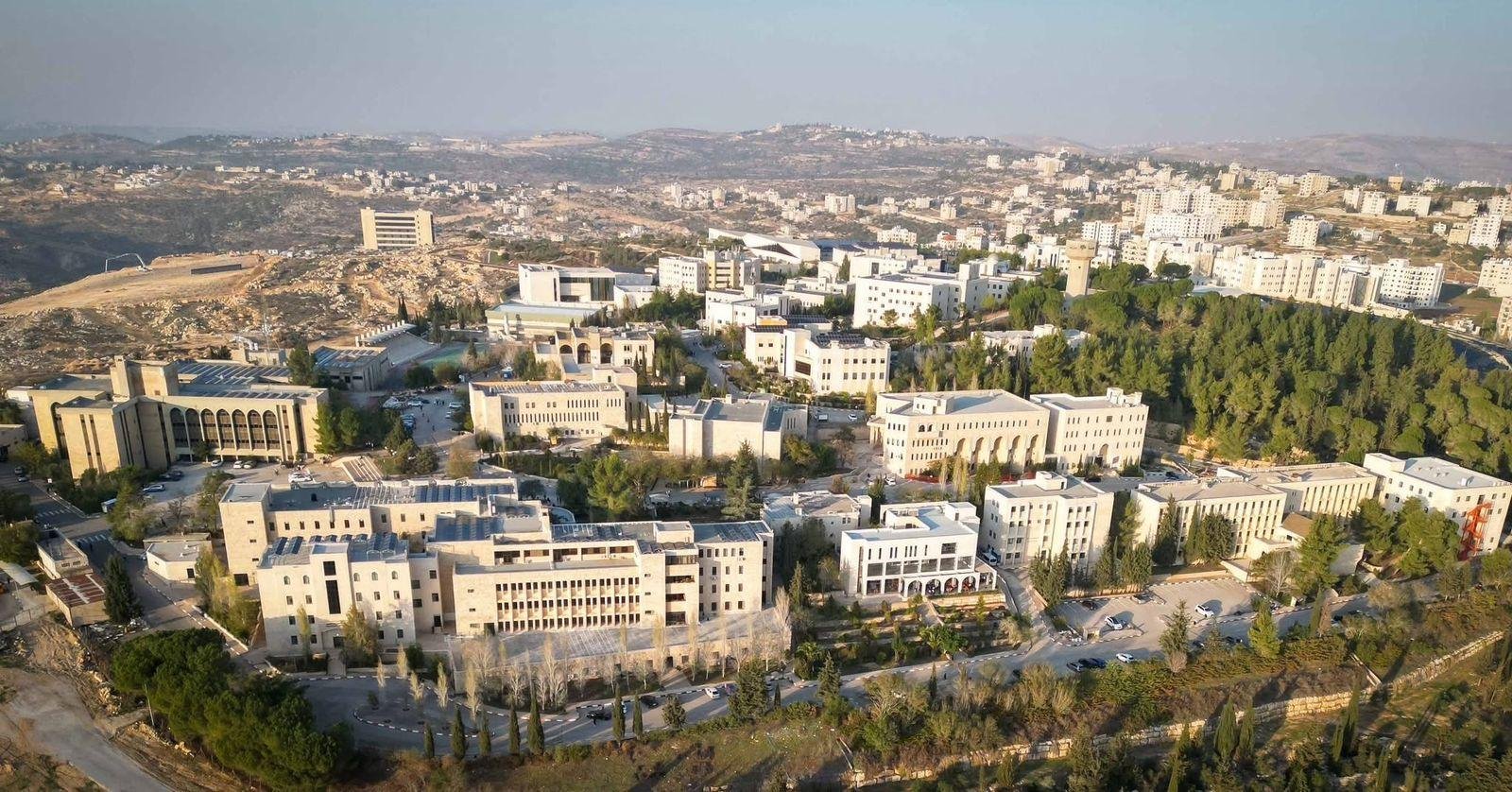
Located on the archaeological site of Khirbet Birzeit, the 750-dunam hilltop campus sits 850m above sea level with Mediterranean views. Founded 1924, ranked #1 nationally.
Partner with us to advance global health research in conflict settings
Interested in sponsoring ICID 2026?
Become a Sponsor